How do you wake up easier and feel alert in the morning?
Updated 2026-07-04
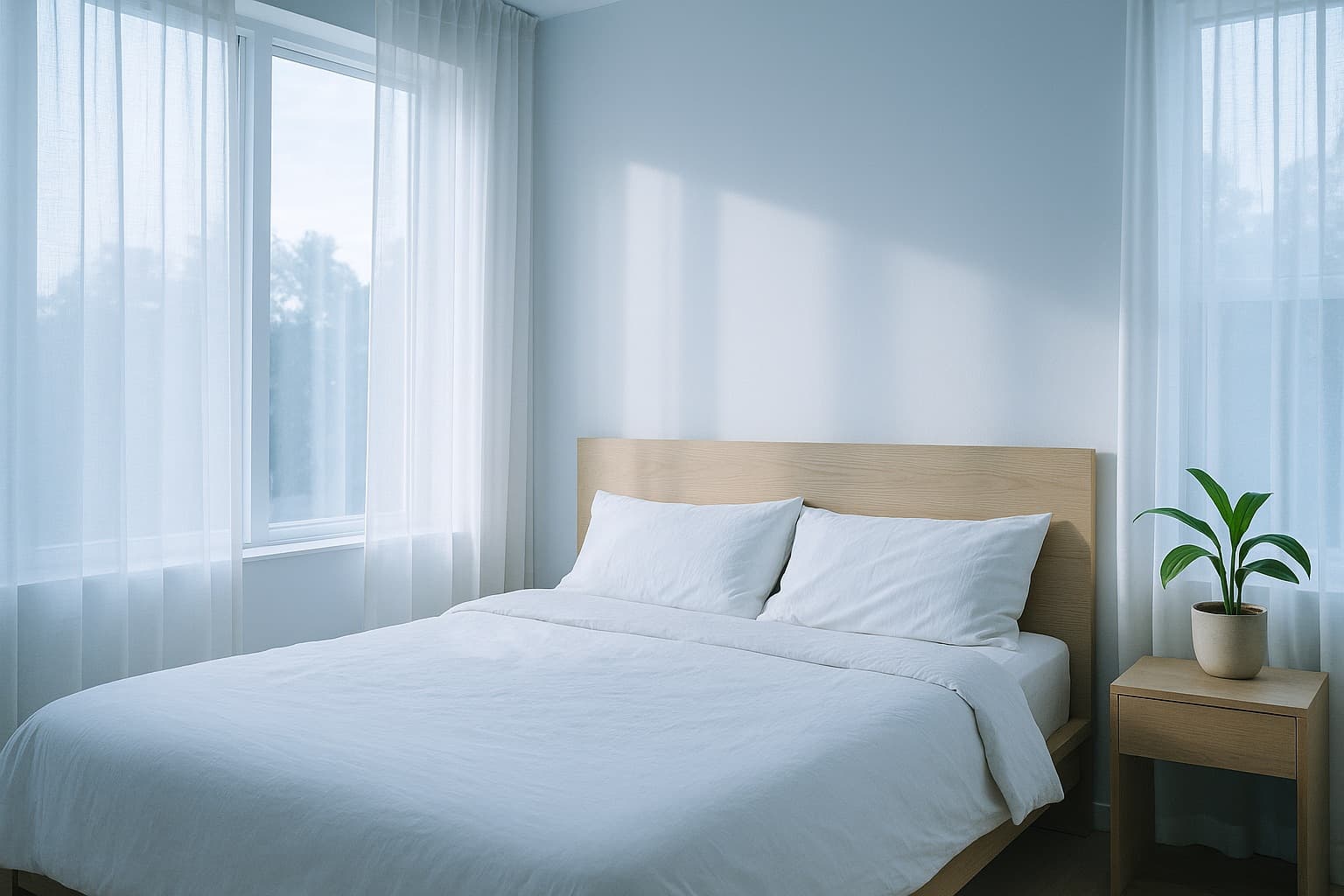
The most effective way to wake up easier and feel alert is to get bright light soon after you wake, ideally within the first hour. Bright, blue-rich morning light is the strongest signal that sets your body clock earlier and lifts daytime alertness. Outdoor daylight is best, even on a cloudy day it is far brighter than indoor lighting; when it is still dark out, a bright cool-white bulb is a good stand-in. Pair it with a consistent wake time for the biggest effect.
Why morning light works
Light in the morning does two things: it tells your body clock 'the day has started', nudging your whole rhythm earlier, and it directly increases alertness. Getting it consistently is the closest thing there is to a free upgrade to your energy and your sleep timing.
The groggy, heavy feeling right after waking (sleep inertia) fades faster with bright light and movement.
How much, and how long
More and brighter is better, and outdoors beats indoors by a wide margin: a bright room might be a few hundred lux, while outdoor daylight is thousands to tens of thousands, even under clouds. Aim for a good dose in the first hour, from a few minutes on a bright day to longer on a dim one.
You do not need to stare at anything; just being in bright light, near a window, on a walk, or on a balcony, does the job.
Dark mornings and winter
In winter or before sunrise, indoor light is your fallback. A bright, cool-white, blue-rich bulb turned on right after you wake helps signal 'day' when the sun is not up yet. It is not as strong as real daylight, but it is far better than a dim, warm morning.
Frequently asked
How can I wake up more easily in the morning?
Get bright light as soon as you can after waking, keep a consistent wake time, and let some movement and cool, bright light shake off the initial grogginess. A gradually brightening light or a bright bulb on a timer can help on dark mornings.
Does morning light really help you wake up?
Yes. Bright morning light both increases alertness directly and shifts your body clock earlier, which over time makes waking at your target time easier.
How long should I get morning light?
Aim for a solid dose in the first hour after waking. On a bright day outdoors, a short time is plenty; on a dim day or with indoor light, longer is better.
What is the best light to wake up to?
Bright, cool-white (blue-rich) light in the morning is ideal because it best mimics daylight's wake signal. This is the opposite of what you want at night.
OIO delivers bright, blue-rich light in the morning automatically, which is the exact signal that helps you wake up and sets your clock earlier. When the sun is not up yet, that morning boost still happens on your schedule, then the same bulb warms and removes the blue as the day turns to evening.
- CIE S 026:2018. System for Metrology of Optical Radiation for ipRGC-Influenced Responses to Light.
- Brown et al. (2022). Recommendations for daytime, evening and nighttime indoor light exposure. PLOS Biology.
- Berson, Dunn & Takao (2002). Phototransduction by retinal ganglion cells that set the circadian clock. Science.
- WELL Building Standard v2, Feature L03: Circadian Lighting Design.
This guide is general information about light and circadian rhythm, not medical advice. OIO is not a medical device and does not diagnose, treat or cure any condition. If you have a persistent or serious sleep problem, talk to a clinician.