What is the best light for sleep?
Updated 2026-07-04
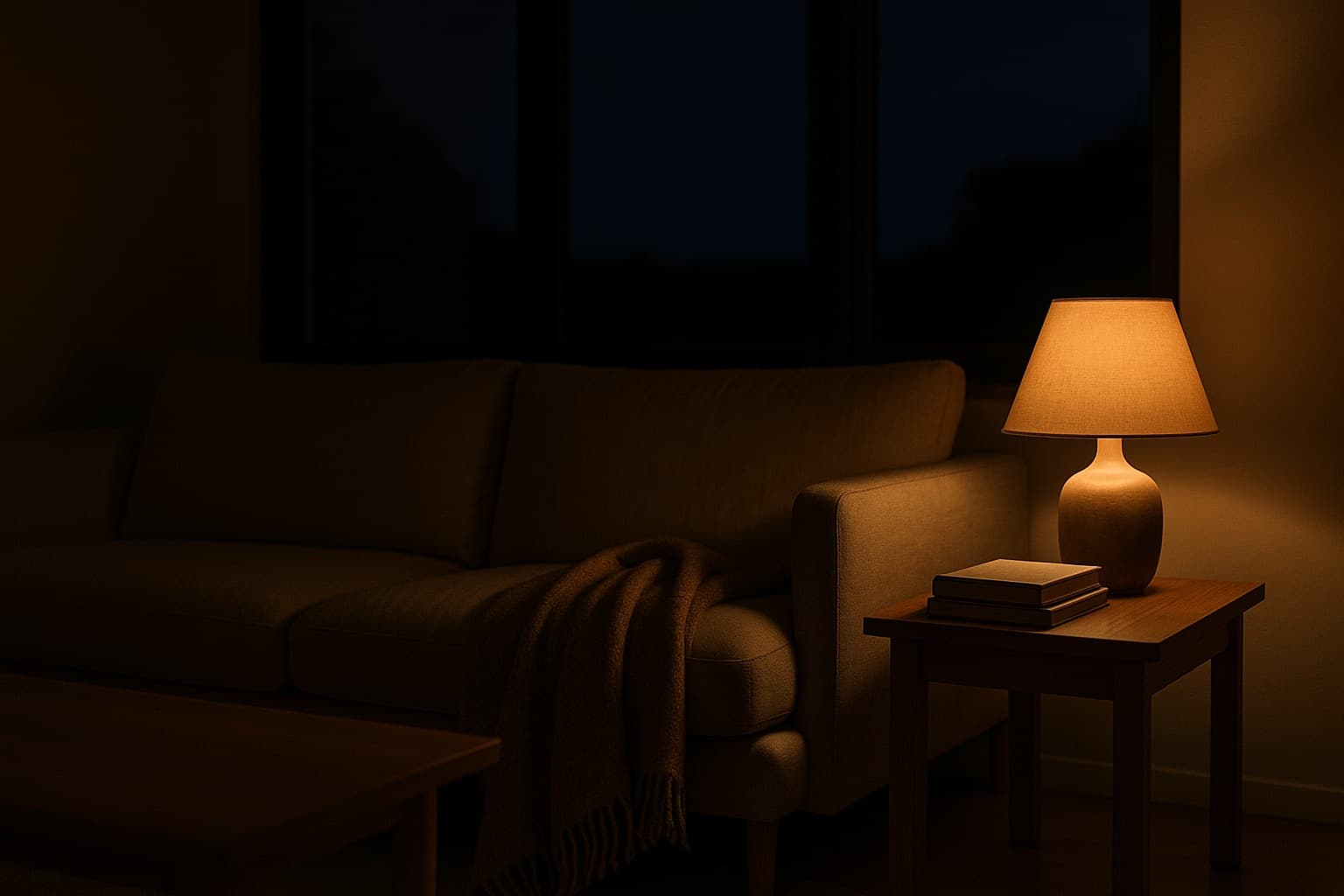
The best light for sleep is not one fixed 'sleep color' all day, it is light that changes with the time of day the way sunlight does: bright and blue-rich in the morning to anchor your body clock and make you feel awake, then warm, dim and as free of blue light as possible in the hours before bed. Your body clock mostly reads the blue-cyan part of light, roughly 440 to 495 nanometres. Plenty of it by day keeps your rhythm on time; almost none of it at night lets your evening stay biologically calm so sleep comes more easily.
It is about the signal, not just the brightness or color
A special set of cells in your eyes, separate from the ones you see with, are most sensitive to blue-cyan light around 480nm. They do not form images. Their job is to tell your brain's master clock whether it is day or night. That is why the same room can feel cozy and still keep your clock in 'daytime' mode: what matters is how much light lands in that blue band, not how bright the room looks.
So 'warm and dim' is good advice, but incomplete. An ordinary warm-white bulb dimmed low still leaves a surprising amount of blue in it. The best evening light keeps the warm look you want while genuinely removing the blue signal.
Morning: bright and blue-rich
In the first hour or two after you wake, get as much bright light as you reasonably can, ideally daylight by a window or outdoors. Bright, blue-rich morning light is the single strongest cue that sets your clock earlier and makes the rest of the day feel more alert.
On dark mornings or in winter, a bright cool-white bulb is a reasonable stand-in.
Evening: warm, dim and blue-free
In the last two to three hours before bed, dim the lights, keep them warm, and cut the blue. Lower overhead lights, use lamps at eye level or below, and avoid a blast of bright white light in the bathroom right before bed.
Screens matter, but they are usually a small part of the light hitting your eyes compared with the lamps and ceiling lights filling the whole room. Fixing the room light is often more effective than fixing the phone.
Timing and consistency beat any single bulb
The biggest lever is not a product, it is regularity: roughly the same wake time every day, bright light early, dim light late. A great bulb makes the evening part effortless, but keeping a steady schedule is what actually moves your rhythm.
Evening lighting options, and what each one actually does
| Option | Keeps a warm, livable room? | Removes blue from your room light? |
|---|---|---|
| Turn lights off / candlelight | No, it is dark | Yes, but you cannot see |
| Ordinary warm-white bulb, dimmed | Yes | Only partly; blue remains |
| Dim-to-warm / tunable-white bulb | Yes | Reduced, but blue is still there |
| Blue-light-blocking glasses | Yes (through the glasses) | Only for your eyes, not the room |
| Screen filters (f.lux, Night Shift) | N/A | Only your screen, not the room |
| A circadian bulb (spectrally engineered) | Yes | Yes, blue removed while the white stays warm |
How to set up your lighting for better sleep
- 1Get bright light early
Within an hour of waking, seek bright light: open the curtains, step outside, or turn on a bright cool bulb.
- 2Keep daytime bright
Let your daytime spaces be bright and cool-ish; dim indoor light all day leaves you under-lit.
- 3Wind the light down at night
In the two to three hours before bed, dim the lights, keep them warm, and lower them below eye level.
- 4Cut the blue, not just the brightness
Use warm, blue-free light in the evening; a circadian bulb does this automatically without making the room dark.
- 5Keep a steady schedule
Aim for a consistent wake time every day, including weekends; consistency is the strongest lever.
Frequently asked
What color light is best for sleep?
Warm colors (a low color temperature, around 1800 to 2700K) in the evening, because they usually contain less of the blue-cyan light your body clock reads. But color is a rough proxy: two lights can look equally warm yet carry very different amounts of blue. What matters at night is low blue signal, not just a warm look.
Does warm light help you sleep?
Warmer, dimmer light in the evening generally helps because it tends to carry less blue and signals 'evening' rather than 'daytime'. It is most effective when combined with dimming and a consistent schedule.
Is red light good for sleep?
Deep red and amber light have very little of the blue-cyan signal your clock reads, so they are a good choice for late evening and night lights. The trade-off is that pure red light is dim and unnatural to live by; a warm white with the blue removed is more practical for a normal evening.
What is the best light bulb for sleep?
The best bulb is one that is bright and blue-rich in the morning and warm and blue-free at night, automatically. A tunable-white or dim-to-warm bulb helps, but it reduces blue rather than removing it. A circadian bulb such as OIO is engineered to strip the blue signal at night while keeping a warm, livable white.
Should I sleep with the lights on or off?
Sleep in the dark. Even modest light during sleep can register with your body clock. Keep the room as dark as is comfortable, and if you need a night light, use a very dim, warm or amber one.
OIO is a smart bulb built for exactly this pattern. Instead of holding one fixed setting, it changes the spectrum of its light across the day: bright and blue-rich by morning, then warm and blue-free by night, on a schedule you set once. At night it keeps the same warm white your eyes see but removes almost all of the blue signal your body clock reads.
- CIE S 026:2018. System for Metrology of Optical Radiation for ipRGC-Influenced Responses to Light.
- Brown et al. (2022). Recommendations for daytime, evening and nighttime indoor light exposure. PLOS Biology.
- Berson, Dunn & Takao (2002). Phototransduction by retinal ganglion cells that set the circadian clock. Science.
- WELL Building Standard v2, Feature L03: Circadian Lighting Design.
This guide is general information about light and circadian rhythm, not medical advice. OIO is not a medical device and does not diagnose, treat or cure any condition. If you have a persistent or serious sleep problem, talk to a clinician.