What is the best night light color for kids' and babies' sleep?
Updated 2026-07-04
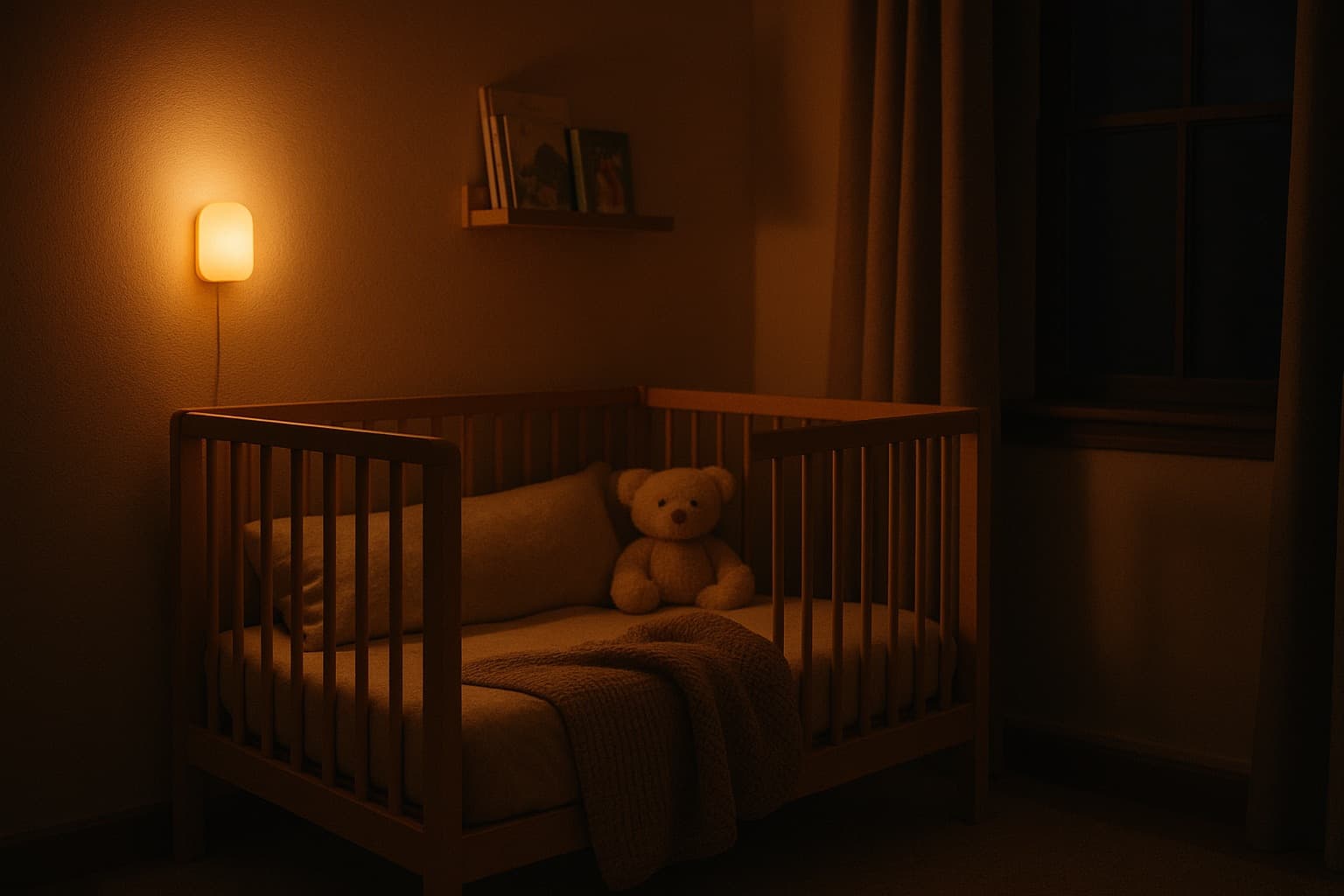
The best night light for a child's or baby's sleep is a very dim, warm-toned one, ideally amber or red, because those colors carry the least of the blue-cyan light that tells the body clock to stay awake. Cool-white and blue night lights are the worst choice for sleep. A fully dark room is ideal; if you need a night light for feeds, diaper changes or fear of the dark, keep it as dim and as warm or red as possible. For ongoing sleep problems, check with your pediatrician.
Why color matters at night
The same light-sensing system that sets an adult's body clock is present in children, and it responds most to blue-cyan light. A bright, cool or blue night light quietly signals 'daytime' and can make settling and staying asleep harder. A dim, warm or red glow carries very little of that signal.
Brightness matters too: even the right color is better kept faint.
Dark is best; if you need a night light, keep it warm and dim
A dark room is the ideal sleep environment at any age. When a night light helps, for late feeds, a scared toddler, or safe movement at night, choose one that is warm, amber or red, and as dim as is useful.
Avoid the bright white and color-changing (especially blue) night lights that are common; they are the least sleep-friendly. And keep bright overhead lights off during night-time wake-ups.
A note for parents
This is general information about light, not medical or developmental advice. Babies' and children's sleep involves far more than lighting, and if your child has a persistent sleep problem, your pediatrician is the right first stop.
Frequently asked
What color night light is best for babies and toddlers?
Warm amber or red is best, because it carries the least blue-cyan light that signals wakefulness to the body clock. Keep it dim. Avoid cool-white and blue night lights for sleep.
Is a blue or white night light bad for kids' sleep?
Blue and cool-white light are the least sleep-friendly, because they deliver the most of the signal that tells the body clock to stay awake. If you use a night light, a dim warm or red one is a better choice.
Does red light help children sleep?
Red and deep-amber light contain very little of the blue-cyan signal the body clock reads, so a dim red night light is far less disruptive to sleep than a white or blue one. A dark room is still ideal.
Should a nursery be completely dark?
A dark room is the best sleep environment. If you need some light for feeds or safety, keep it as dim and as warm or red as possible rather than turning on bright white light.
OIO's night mode dims to a deep, warm, blue-free ember, and it can go very low while staying a warm glow rather than a cold one, which suits a bedroom, a nursery or a hallway for night-time trips. It is a lighting product, not a medical or safety device.
- CIE S 026:2018. System for Metrology of Optical Radiation for ipRGC-Influenced Responses to Light.
- Brown et al. (2022). Recommendations for daytime, evening and nighttime indoor light exposure. PLOS Biology.
- Berson, Dunn & Takao (2002). Phototransduction by retinal ganglion cells that set the circadian clock. Science.
- WELL Building Standard v2, Feature L03: Circadian Lighting Design.
This guide is general information about light and circadian rhythm, not medical advice. OIO is not a medical device and does not diagnose, treat or cure any condition. If you have a persistent or serious sleep problem, talk to a clinician.